You can see the breakout setting up. The hard part is turning it into an alert you'd trust enough to act on at 3am.
Stan Wang
Founder
The setup every trader has in their head
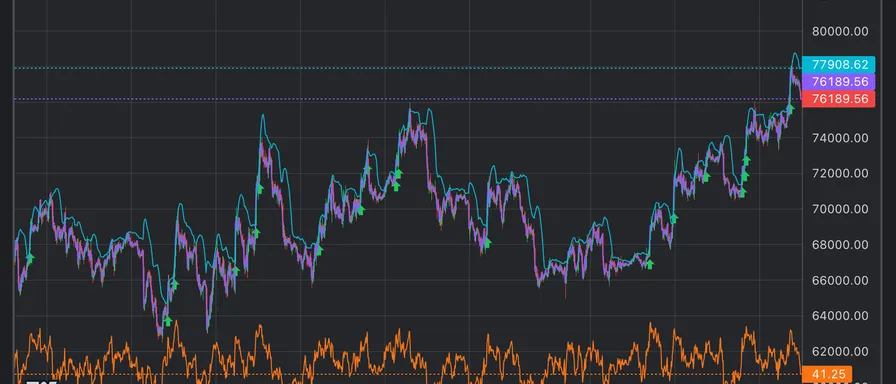
BTC is pushing into resistance. RSI is stretching up. Volume thickens into the move. You can see the breakout forming. The hard part isn’t spotting it — it’s turning that read into something that watches the market for you, reliably, while you’re busy with anything else.
How it usually goes
You open TradingView. You set a price alert. Maybe an RSI alert too. But the tool only knows about one condition at a time — you can’t cleanly bind RSI and Bollinger and volume into a single rule. And you have no way to see what your rule would have done in the past, so you’re guessing on whether it’s too loose or too tight. The alert eventually fires at 3am. You wake up, rebuild the context from scratch, and try to decide if it’s real before the move is over.
What we built instead
In Stingray, you describe the setup in chat:
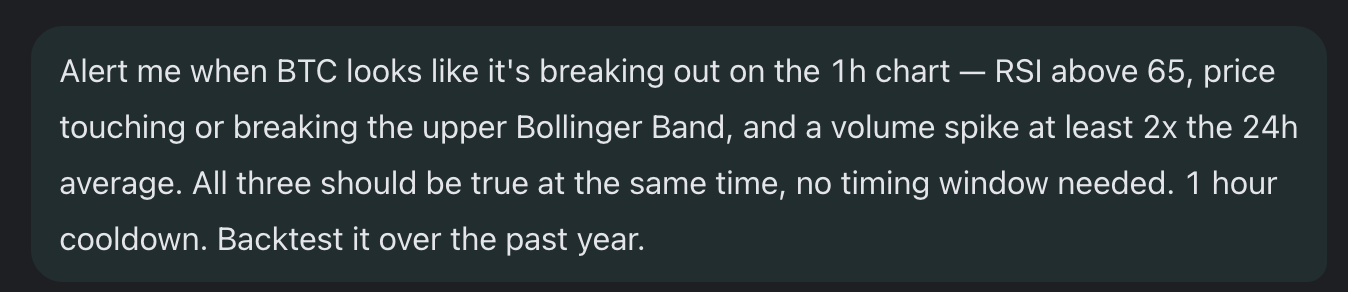
That becomes a structured alert with three conditions bound together and a cooldown baked in. Before you activate it, you can backtest — not a generic overlay, but the exact moments over the past year where your specific rule would have fired.
What the backtest showed
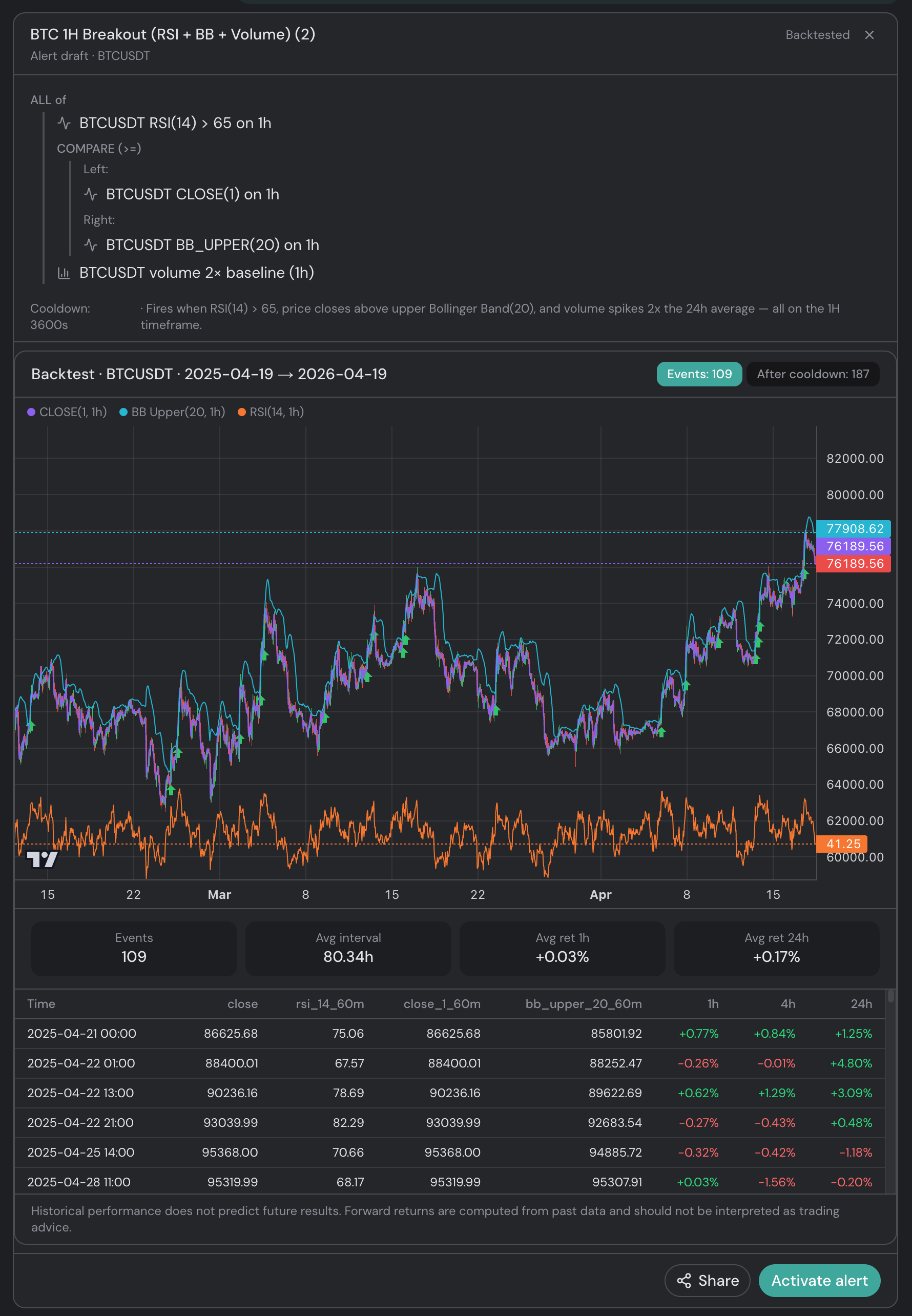
Over the last 12 months of BTCUSDT, this rule fired 109 times (after the 1h cooldown dedup). That’s one fire every ~3.3 days on average — meaningful, not noise, not spam.
Forward-return profile in aggregate:
- 1h forward return: +0.03%
- 4h forward return: −0.26%
- 24h forward return: +0.17%
These are the base rates of the rule you just described. You can see the post-breakout pullback in the 4h number — the classic trap where late buyers get shaken before the trend resumes. You can see the weak positive drift at 24h. You can click into any individual fire, see the exact candle, and judge it with your own eyes.
That’s information you had no way to get before you activated. And it’s information that changes how you react when the alert goes off for real.
Why this is the loop that matters
The backtest isn’t there to tell you the rule prints money. It’s there to show you the history of your own logic — how often it fires, what happens in the hours after, what clustering looks like. Every other alert tool skips this layer and hopes you don’t notice.
Tighten RSI to 70, the trigger count drops and the return profile shifts. Add a trend filter on top, different behavior again. You see the tradeoff instead of guessing it, then activate the version you’d actually trust.
When it fires, it comes to you
Once activated, the alert runs on our side and fires straight to your Telegram — your DM, not a push notification you’ll ignore. Price, the snapshot of conditions, a link back to the live view. Enough context to decide without rebuilding it from scratch.
What this isn’t
Stingray doesn’t execute the trade. It doesn’t predict the market. The backtest shows what your logic would have done historically — a proof surface, not an oracle.
But if you’ve ever set an alert and wondered whether the rule was any good, this is the workflow that closes the loop.
 Web
Web