See how Stingray's agentic trading desk turns a plain-English market thesis into a typed rule, backtest, alert, and live monitoring workflow.
Short answer
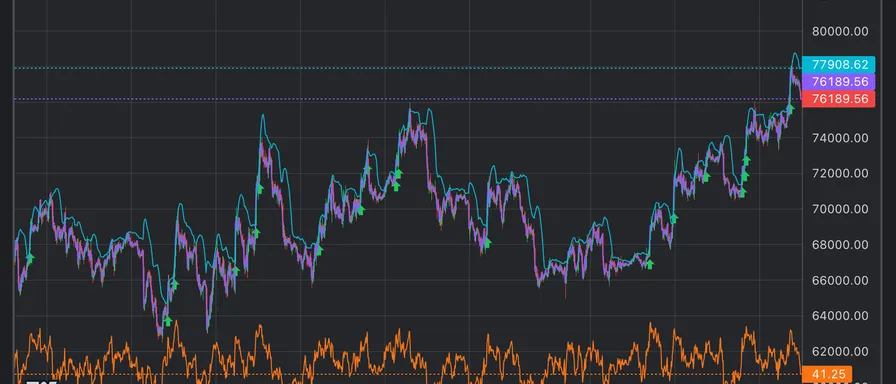
Stingray’s agentic trading desk works in four steps:
- Describe the trading thesis in plain English.
- Convert it into a typed rule and backtest the historical fires.
- Review the backtest evidence and failed triggers.
- Monitor the same rule live, then decide whether it deserves more time and resources.
That is different from a chatbot answer and different from a bot template. The point is to keep the strategy inspectable at every stage.
The examples here use onchain venues because they expose a transparent live market data surface. The workflow itself is broader: thesis, typed rule, evidence, and live monitoring.
Step 1: Start with the thesis
Most trading automation fails because it starts too late. It begins with an order type or a bot template before the idea is precise.
Stingray starts with the thesis:
Alert me when Hyperliquid BTC funding turns sharply negative, open interest is rising, BTC is holding above its 20-day moving average, and recent news is not dominated by a major exchange-risk story.
The system turns that into questions the strategy has to answer:
- Which venue and market should be used?
- What does “sharply negative” mean?
- How should open interest be measured?
- What timeframe should the rule use?
- Which news sources count?
- What invalidates the setup?
- What should be measured after each fire?
This is where “agentic” matters. The desk should not simply accept vague language. It should turn the language into visible choices.
Step 2: Turn it into a typed rule
The next step is making the strategy inspectable.
A typed rule defines:
| Component | Example |
|---|---|
| Asset | BTC perpetuals on Hyperliquid |
| Funding condition | Funding is below the 20-day percentile threshold |
| Positioning condition | Open interest rises by more than a defined amount |
| Technical filter | Price is above the 20-day moving average |
| News filter | No high-impact exchange-risk story in the lookback window |
| Cooldown | Fire at most once every 24 hours |
| Review windows | 1d, 3d, 7d, and 14d forward returns |
| Invalidation | Price closes below the chosen support level |
Once the rule is typed, the trader can inspect it before anything runs. That is the difference between an agentic trading desk and a black-box prompt.
Step 3: Backtest before live monitoring
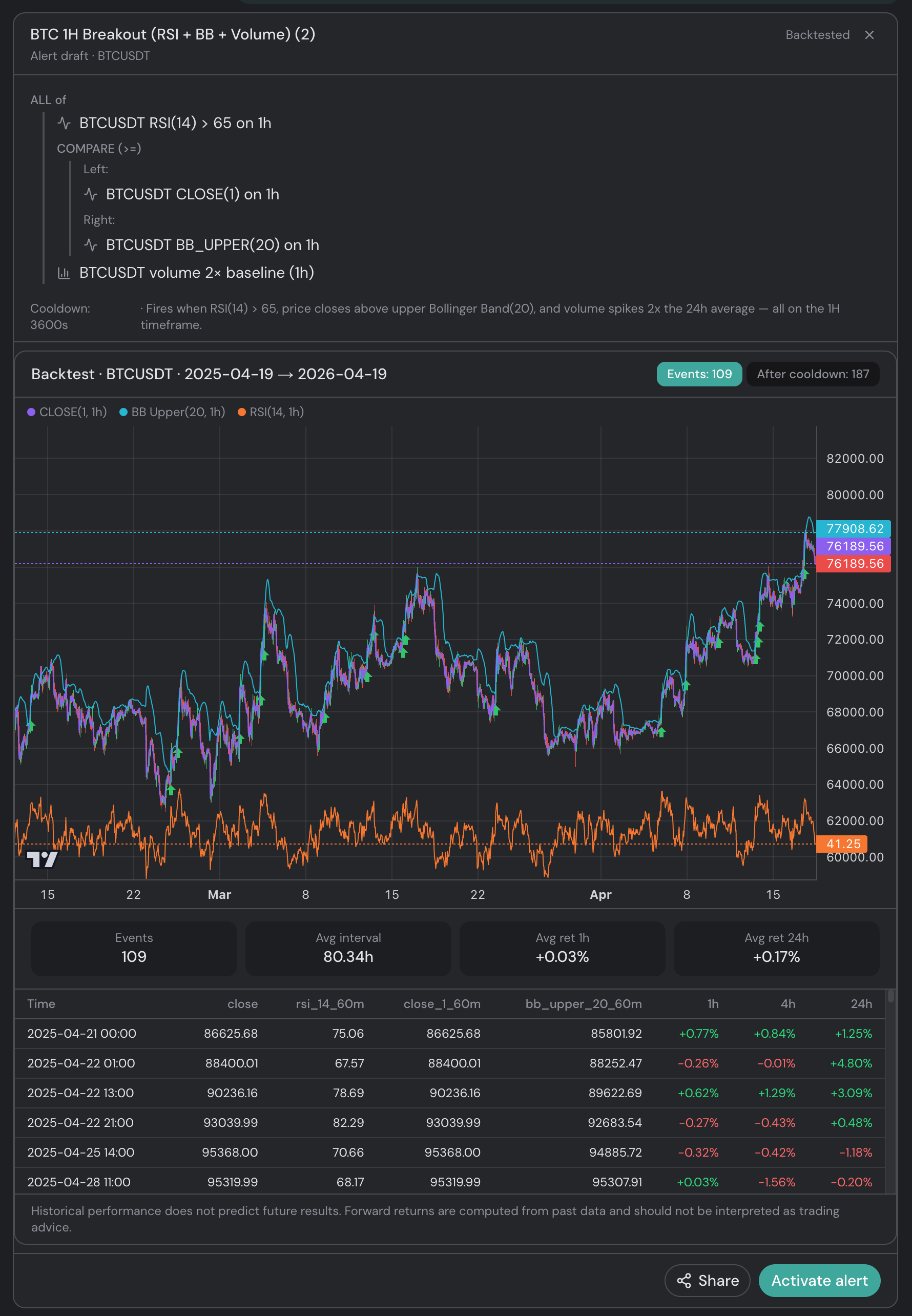
The backtest answers whether the rule behaved the way the thesis expected.
Review:
- How often the rule fired.
- Whether results were dominated by one market regime.
- Whether funding, open interest, and price filters each helped.
- Whether news filters removed bad fires or just reduced sample size.
- What happened after failed signals.
- Whether slippage and liquidity made the setup realistic.
- Which kill criteria would have stopped the rule.
The goal is not to force the backtest to look good. The goal is to decide whether the setup deserves live monitoring.
Step 4: Monitor live and decide what happens next
After the backtest, the first live version should usually be an alert.
Live monitoring checks whether the rule behaves the same way out of sample:
- Did the exact condition fire?
- Was the market liquid enough?
- Did the same invalidation level still make sense?
- Did the signal arrive during a broader risk-off move?
- Would the trader still take the setup after reading the evidence?
After those checks, the trader decides whether the setup deserves more time and resources. Stingray does not place trades.
Example workflow
Here is a compact agentic trading desk workflow:
| Stage | Trader input | Stingray output |
|---|---|---|
| Thesis | “I want to fade extreme negative funding if price is holding trend.” | Clarifying questions and a draft rule |
| Rule | Trader approves thresholds, venue, and filters | Typed strategy definition |
| Backtest | Trader requests historical evidence | Trigger history, forward returns, failures, and regime split |
| Monitor | Trader turns on alerts | Live fires with evidence attached |
| Decide | Trader reviews live behavior | Evidence for the trader’s next decision |
The important part is continuity. The live alert should use the same rule that was backtested.
Where Stingray fits
Stingray is built for the workflow between idea and decision. It helps a trader move from a thesis to a typed rule, from typed rule to evidence, and from evidence to live monitoring.
For related workflows, read Top Agentic Crypto Trading Tools for Plain-English Strategies, What Is Stingray? Automated Trading Strategies Explained, and How to Automate an Onchain Trading Strategy Without Code.
Verdict
An agentic trading desk should not be judged by how confidently it answers a prompt.
It should be judged by whether it can turn a thesis into a typed rule, backtest that rule, monitor the same condition live, and preserve enough evidence for the trader to decide what happens next.
 Web
Web